
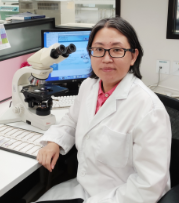
Dr. Janet J.Y. Hui
BVMS (Commendation), UK
MRCVS, UK
DipRCPath (Vet. Clin. Path.), UK Email: janet.hui@pathlabhk.com
PathLab Medical Laboratories Ltd. has been servicing the veterinary community for over 20 years. We strive to provide quality laboratory services to all our clients and recognize the need for constant upgrades in our work. Dr. Janet Hui BSc (Hons) BVMS MRCVS DipRCPath, our Consultant Veterinary Clinical Pathologist from Edinburgh, has led our Veterinary Division to become a first-class diagnostic center among veterinarians in Hong Kong SAR since 2009.
Dr. Hui personally reports on all areas of laboratory investigations, from bone marrow aspirates to FNAs to surgical resection specimens, and is on hand to provide specialist advice to interpret complex cases. We can consider autopsy cases with prior arrangements. PathLab’s Veterinary Division welcomes your input and will continue to strive to provide better services to you and your patients. Our sincere thanks go out to our colleagues in the veterinary community for your patronage, trust, and support for Dr. Hui and our laboratory.
| General enquiries: 3983 1800 (Main Lab) | |
| Email: info@pathlabhk.com | |
| New accounts: dataentry@pathlabhk.com | |
| Sample pick up: | |
| Kowloon & New Territories | 3651 1000 |
| Hong Kong Island | 3983 1800 |